Key results in 2025
In 2025, Nopef approved 52 feasibility studies with a total value of EUR 2,128,950 in conditional loans. This is slightly below the 54 proposals approved in 2024 but remains higher than in 2022 and 2023. The financing level is stable and reflects strong, ongoing demand for early-stage support from Nordic SMEs.
Feasibility studies financed 2022-2025

Number of feasibility studies
and financing granted in 2025
is slightly lower than in 2024,
and financing granted in 2025
is slightly lower than in 2024,
but remains higher than
in 2022 and 2023
in 2022 and 2023
Feasibility studies financed 2022-2025
Number of feasibility studies
and financing granted in 2025
is slightly lower than in 2024,
and financing granted in 2025
is slightly lower than in 2024,
but remains higher than
in 2022 and 2023
in 2022 and 2023
Types of projects funded
The balance between pilot and demonstration projects and international establishment projects shifted in 2025. Of the 52 approvals 27 projects (52%) supported pilots or demonstration activities in the target country and 25 projects (48%) focused on preparing or implementing international establishment
Pilot and demonstration projects accounted for EUR 1.13 million (53%) of total financing, while international establishment projects received EUR 1.00 million (47%). This marks a notable change from previous years, when about 70% of approved projects were international establishment projects and 30% were pilot or demonstration projects.
This shift indicates that more companies are ready to validate and demonstrate their technologies directly in target markets, reflecting stronger demand for real-world testing. Between 2020 and 2025, internationalisation projects represented about 70% of all projects approved.
27 projects
supported preparatory work for pilot or demonstration activities in the target country
25 projects
focused on preparing or implementing international establishment
Proposals approved in 2025 covered a broad mix of sectors, with the largest shares being in energy efficiency, storage and distribution (17%) and industrial goods and services (15%), reflecting strong demand for solutions that increase resource and process efficiency. There was also significant activity within the areas of water technology (12%), solar power (10%), agriculture (10%) and waste and recycling (8%), demonstrating the diverse applications of Nordic green innovations across environmental infrastructure and production sectors. Other sectors include buildings and infrastructure, aquaculture and marine, and digitalisation.
Sectors of feasibility studies approved in 2025

Sectors of feasibility studies approved in 2025
Proposals approved
in 2025 covered
a broad mix of sectors
in 2025 covered
a broad mix of sectors
Geographical distribution
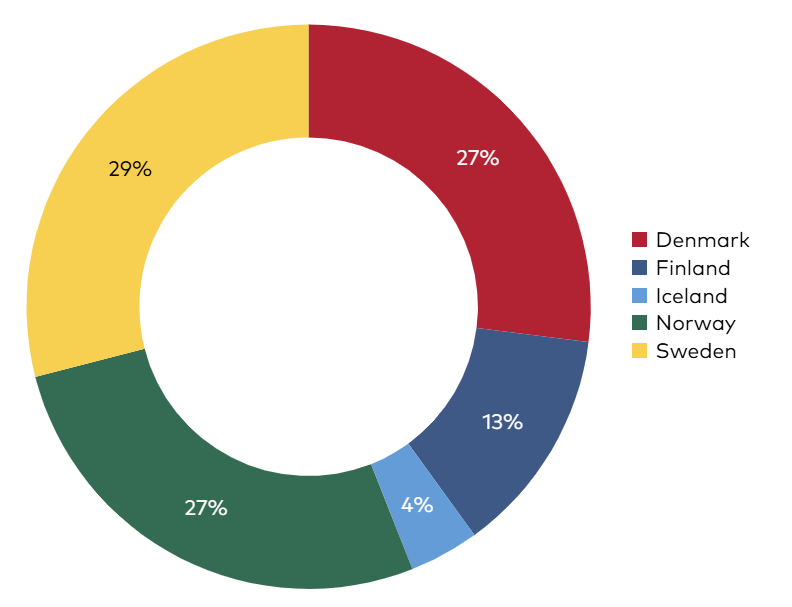
In terms of the origin of proposals, project activity was well balanced: Denmark, Norway and Sweden each accounted for about one quarter of approvals, with Finland and Iceland also well represented. This shows that Nopef continues to serve SMEs across the whole Nordic region.
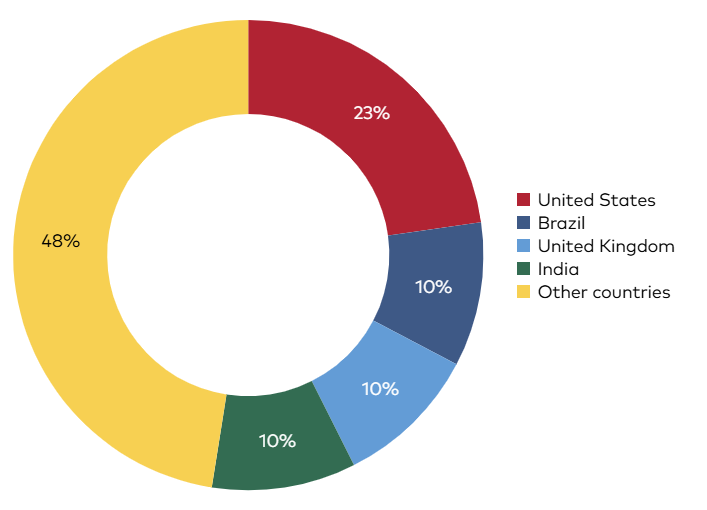
Proposals approved in 2025 covered 21 target markets. The United States remained the single largest target market with 12 projects (23%). Brazil, India and the United Kingdom each attracted 5 projects (10%), while Kenya hosted 3 projects and countries such as Canada, China, Colombia, Indonesia and Uganda each hosted 2 projects. Projects also targeted Ethiopia, Ghana, Honduras, the Maldives, New Zealand, South Africa, South Korea, Sri Lanka, Türkiye, Ukraine and the United Arab Emirates.
This broad spread confirms a continued interest in both mature and emerging markets, as well as regions where sustainable solutions can have significant climate and development impact.
USA
12 projects
Brazil
5 projects
UK
5 projects
India
5 projects
Target country
Country of origin
Target country
Country of origin
Environmental drivers
All projects approved in 2025 were screened against sustainability criteria to ensure they will contribute to measurable climate and environmental benefits if implemented.
Projects approved in 2025 by environmental driver
Projects approved in 2025 by environmental driver

Energy efficiency projects aim to increase energy efficiency of industry, buildings, transport or digital systems.
Renewable energy projects focus on solar, wind, bioenergy or geothermal technologies.
Circular economy projects aim to enable more efficient use of resources, recycling of waste or circular business models.
Water and oceans projects aim to support sustainable use of water and marine resources, including water treatment systems and aquaculture.
Pollution prevention and control projects aim to reduce pollution to air, water or soil.
Biodiversity and ecosystems projects aim to protect or restore ecosystems, including agriculture and nature restoration.
Climate adaptation projects aim to help communities and sectors adapt to the impacts of climate change.
“Nopef’s participation helped us to improve the quality of the pilot implementation by providing us with structure and targets around which we could effectively plan. With its financial support, we were able to undertake a cost-effective implementation.”
Jonas Brandt, CFO
Arvet Produktion AB
Nopef approval in 2020 for a feasibility study assessing a pilot in Kenya.
Stakeholder engagement
Active engagement with our stakeholders is essential for ensuring Nopef’s work remains visible, relevant and well aligned with the needs of Nordic SMEs and international partners. By taking part in conferences, forums and sector-specific events, Nopef strengthens its network, shares insights on Nordic green innovation and stays informed about emerging trends in global markets. These activities also help build awareness of the fund’s offerings among potential applicants and stakeholders across the Nordic region and beyond.
In April, Nopef and Nefco, alongside Business Iceland and Green by Iceland, hosted an event in Iceland to introduce growth financing for Icelandic green solutions. Held at the Nordic House in Reykjavík, the event attracted a large audience and featured presentations from Nopef and Nefco as well as case stories from clients.
During the year, Nopef was also represented at the following events:
- Go West, Gothenburg, 28-29 January
- Slush’d, Mandal 12-13 March
- Energy Week, Vaasa, 17-20 March
- Financing Day, Gothenburg, 2 April
- Loop Forum, Copenhagen, 29-30 April
- BUILD, Stockholm, 15 May
- Cleantech Capital Day, Tallinn, 19-20 May
- The Drop, Malmö, 16-18 September
- GBG Tech Week, Gothenburg, 14-15 October
- Oslo Innovation Week, Oslo, 20-24 October
- Building Green CPH, Copenhagen, 29-30 October
- Slush, Helsinki, 19-20 November
- Danish Impact Summit, Copenhagen, 26 November
- Sustaintech Venture Day, Stockholm, 1-2 December
- Go West, Gothenburg, 28-29 January
- Slush’d, Mandal 12-13 March
- Energy Week, Vaasa, 17-20 March
- Financing Day, Gothenburg, 2 April
- Loop Forum, Copenhagen, 29-30 April
- BUILD, Stockholm, 15 May
- Cleantech Capital Day, Tallinn, 19-20 May
- The Drop, Malmö, 16-18 September
- GBG Tech Week, Gothenburg, 14-15 October
- Oslo Innovation Week, Oslo, 20-24 October
- Building Green CPH, Copenhagen, 29-30 October
- Slush, Helsinki, 19-20 November
- Danish Impact Summit, Copenhagen, 26 November
- Sustaintech Venture Day, Stockholm, 1-2 December
Accelerating sustainable construction in the UK
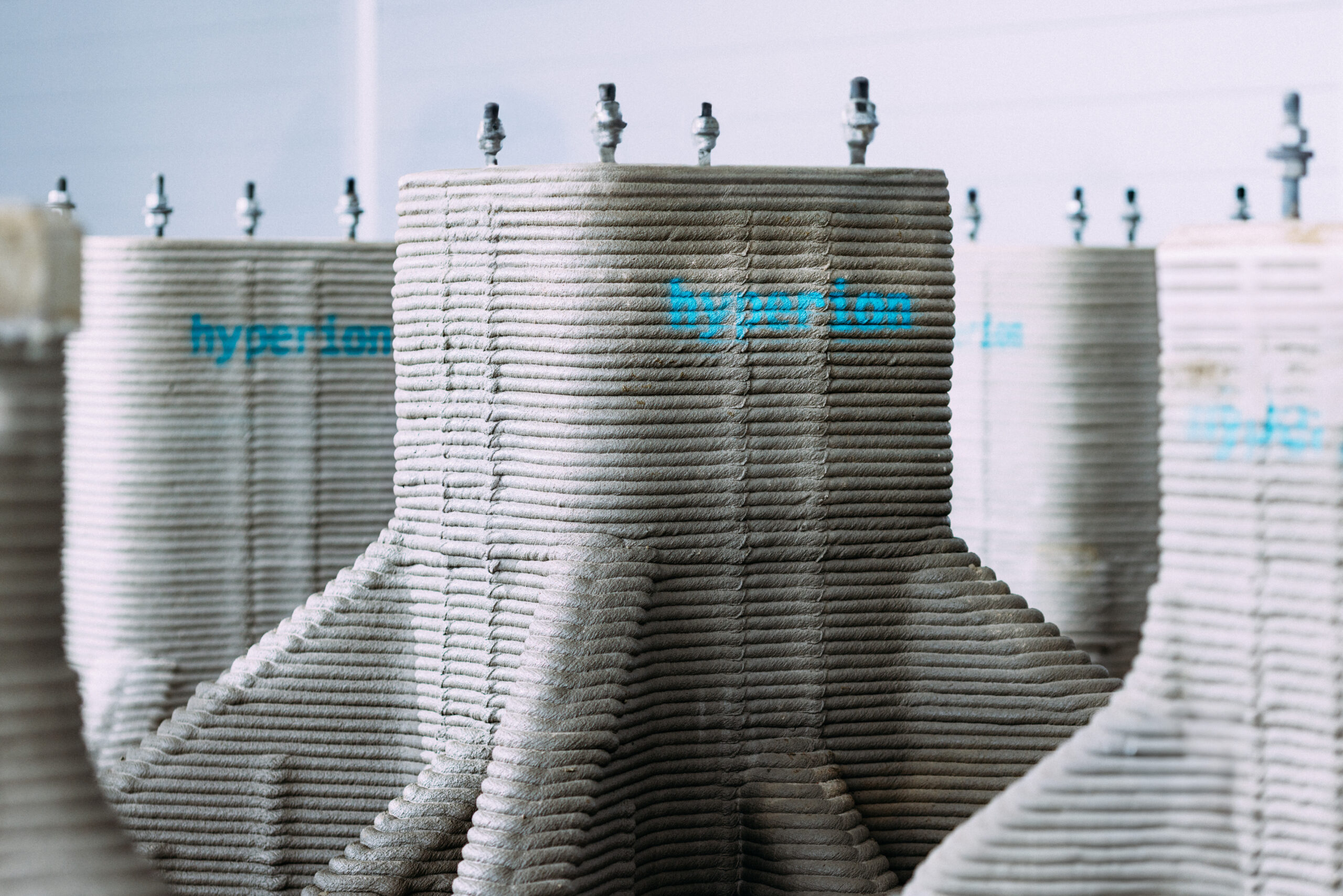
Hyperion Robotics is tackling the environmental impact of concrete production, which accounts for about 8% of global CO₂ emissions, using robotic 3D printing to produce low-carbon concrete structures. With financial support from Nopef, the Finnish company conducted a feasibility study to assess the viability of launching a pilot project in the UK. The study helped Hyperion identify partners, manage risks and navigate certification processes, leading to a successful pilot with Yorkshire Water. The use of Hyperion’s innovative 3D-printed structures reduced material use by 50%, cut CO₂ emissions by 40% and lowered costs by 30%. The UK has since become Hyperion’s largest export market.